Baijiu is the main liquor of China. It is drunk with food and not alone. Baijiu, shochu and soju are basically the same spirit with different tastes and often different ingredients. Imagine whiskey vs bourbon vs rye etc. In contrast to most western liquor, the name most often doesn’t dictate what is used to make it.
Baiju is traditionally made from either corn (maize), sorghum, (sushi) rice, wheat and/or glutinous rice. In Tibet it is made from Tibetan barley. In Okinawa they use Thai rice. In Inner Mongolia and Mongolia they sometimes use milk. You can use whatever starchy thing you want. Just don’t mill it.
There are three main ways to ferment; solid, half solid and liquid. Solid fermentation is the most traditional way and considered the best. When doing a solid fermentation you don’t add water to the boiled or steamed grain. It is fermented in a solid state.
Two of the main esters that are sought after in Baijiu are ethyl acetate (nail polish remover, model paint, model airplane glue) and ethyl lactate (butter, cream)(i). Cheap baijiu made with greedy cuts therefore oftentimes taste like crap. Good baijiu is tasty, but it is an acquired taste and expensive. Most young Chinese people will not enjoy baijiu, but find whiskey and other Western alcohols enjoyable.
You need an «alcohol starter» (Angel yellow label won’t work since it’s too neutral) to make baijiu. A «starter» is called «qu» in Chinese. Think of it as Chinese koji with yeast. Without it you won’t get the right flavours and the yeast won’t have any sugars to eat. Angel makes a few. I’ve used two different ones called Baijiu qu (白酒曲) and Angel small qu (安琪小粬). Angel small qu can also be used to make Chinese rice wine (黄酒).
The liquid and half solid mashes can distilled like normal. The solid fermentation «mash» is distilled by having hot steam run through it. This can easily be done at a home distiller scale by either adding a false bottom to the boiler or taking a beer keg and adding a tri clamp ferrule to the bottom. Connect a filter plate to the newly fitted bottom ferrule and then put on top of the boiler, which you fill with water. Then, the top keg can be filled with the solid fermentation mash and run.
Baijiu is traditionally only distilled once (high abv wash). If you collect the heads and tails and distill this again, that is called Erguotou(二锅头). This is a type of Baijiu that is very popular in Beijing. It was introduced during the reign of the mongols.
After you’ve distilled the baijiu mash, let it rest for at least two weeks. A Baijiu distillery boss told me this is the minimum amount of time you should wait. The more you let is rest the better. According to some guy working at Angel, Baijiu has to be aged for at least half a year as anything younger is too harsh for the human throat to accept.(ii) Blahblahblah...
Most informative youtube video on Baijiu making if you are only gonna watch one:
Recipes
All Baijiu mashes are fermented on the grain.
Most recipes China are either very big or based on percentage of qu per kilo of grain. Therefore all the recipes I’ve written down say how much qu to add per kilo of grain. Always save heads and tails for making Erguotou.
All the recipes can be made solid, half solid or liquid (wet). Just make sure to not add so much water that the abv gets below 10-12%. Since it is only distilled once you need a high abv to get any meaningful product. Most ferments are fermented for at least a couple of weeks. This allows for more development of flavour. I don’t know if you gain a lot in quality if you let it ferment for eight weeks instead of just four. Before, in the 1990s and before, it was common to add sugar to help the qu ferment. If you buy qu from Angel I don’t think you need to do that. The quality of the qu produced now is significantly higher than before. That being said, you don't need to buy Angel's baijiu qu. Any Baijiu qu will do the trick i think.
1 The simplest recipe
Make a mash with a potential abv of over 10%.
Add 5 grams of Angel Blue Baijiu qu per kg of grain
Wait between two and four weeks.
Distill and wait another two weeks before enjoying
2 Half solid simple fermentation
Day one
Add 3 grams of Fragrance Lord Per kg of grain and mix well
Day two
Add 5 grams of the blue Baijiu qu per kg of grain
When fermentation slows down add water. Don’t add too much, as you want the wash to have a fairly high abv. For 4kg of rice, a combined volume of water and rice of 15 liters would be fine i think.
Let it ferment and stew for 30 days before distilling. It will stop fermenting before this, but you want the bacteria and other nice stuff to make as much flavour as they can.
3 Angel’s recipe #1(iii)
Day one
Add 5 grams of Angel small qu and 1 gram of Fragrance lord per kg of grain
Day two
Add 2 grams of the blue baijiu qu per kg of grain
Let it ferment and stew for at least two weeks before distilling
4 Angel’s recipe #2(iv)
Add 5 grams of the blue baijiu qu, 2 grams of Angel small qu and 1 gram of fragrance lord per kg of grain
Let it ferment and stew for at least two weeks before distilling
Here is an industrial recipe. They use fermentation pits when doing solid fermentation. Put it in google translate to read.
http://www.360doc.com/content/21/0123/1 ... 4718.shtml
What are the differences between the recipes? I’m not sure, i’ve just gathered them from different sources different ways to it. As long as you use a qu that is for making baijiu you should be getting a baijiu-like product i think.
More information:
Distilliation was maybe discovered some 2000 years ago in China, but the earliest evidences of making distilled drinks are just around 1000 years old. It really started taking of during the Mongol reign over China(v). Even though Islam was popular, so was Baijiu as well. If you go to China now, you’ll find that northern Muslims don’t mind alcohol that much (guess they have no choice), but the Muslims in the south are more strict on not allowing alcohol in their restaurants etc.
Baijiu is the main liquor of China. It also has the name shaojiu, which is the same as shochu and soju. The Tibetan variety is called qingkejiu which means barley wine. It can both be a beer(vi) and a liquor.(vii) The beer variety I’ve tasted in China is not very tasty. Imagine a beer wort that is half fermented with no hops for bittering. Sickeningly sweet after three sips.
Solid fermentation
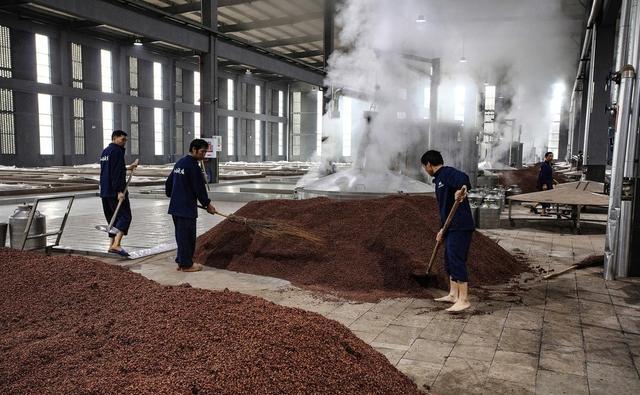
When making a solid fermentation mash, you steam or boil the product you want to ferment. Rice is usually steamed, while corn and sorghum can be boiled. Just do whatever you find convenient. If you steam it, you let it cool before you add the qu and put it in the fermentation vessel. If you boil it you let it drain as well before you put it in the fermentation vessel. You also don’t want to mill anything. This style of fermentation creates the most flavourful baijiu (they say), but the amount of alcohol you produce is little compared to grains used. The ratio is three to one. Three kilos of grain will grant you one kilo of liquor (at roughly 50-60%). They use weight and not volume when measuring baijiu in China.
Half Solid fermentation
Half solid fermentation is done to get the flavour of solid fermentation, but the convenience and output of liquid fermentation. The first fermentation is done in a solid state before water is added and you get additional conversion of sugars into alcohol. This type of fermentation gives 1 kilo of liquor per 1.8 kilo of grain.
Liquid fermentation
You guys know this. Steam or boil the grains. Add water and qu and let it do its thing. Output here is the same as half solid. 1.8 kilos of grain gives 1 kilo of liquor.
Traditional alcohol starters - qu曲
The traditional qu in China are split up into five. They are big qu, small qu, red qu and wheat qu.(viii) The most common ones are big qu and small qu.
Big qu 大曲
Big qu is mostly made from either wheat, barley or peas. It molded into the shape of bricks This gives the strongest baijiu flavour

Small qu小区
Small qu is made from rice or other cereals. This is made in to small balls. This is what is know as Asian/Chinese yeast balls. This gives a more deliacte flavour
Red qu 红曲
Same as monascus. It is rice covered in a red mould.
Bran qu 麦曲
This type of qu is made from bran.
Barley qu 麦曲
This is made from barley
Distillation, is most often done with a “heavenly pot» (天锅) or «steam pot distiller» (蒸锅/蒸酒锅) on the industrial scale(ix)(x), or with a bamboo steamer when doing it at home.(xi) It is distilled once to keep all the good flavour as far as I’ve understood.
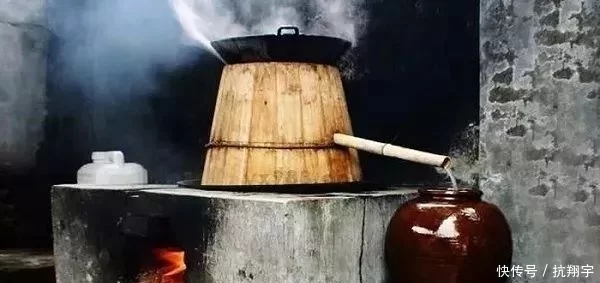
The flavours in Baijiu depends on what is fermented and how it is fermented. Rice gives a rounder easier flavour than sorghum. If you ferment sorghum for a long time in stone brick pits you get the strongest flavours.
There are a couple of Baijiu qu you can buy on aliexpress. If you are able, I believe buying on taobao and then having it sent to you is better and cheaper, but I don’t know how to do it. Since most of you probably don’t read Chinese I’ll introduce some of the Angel products I have used:
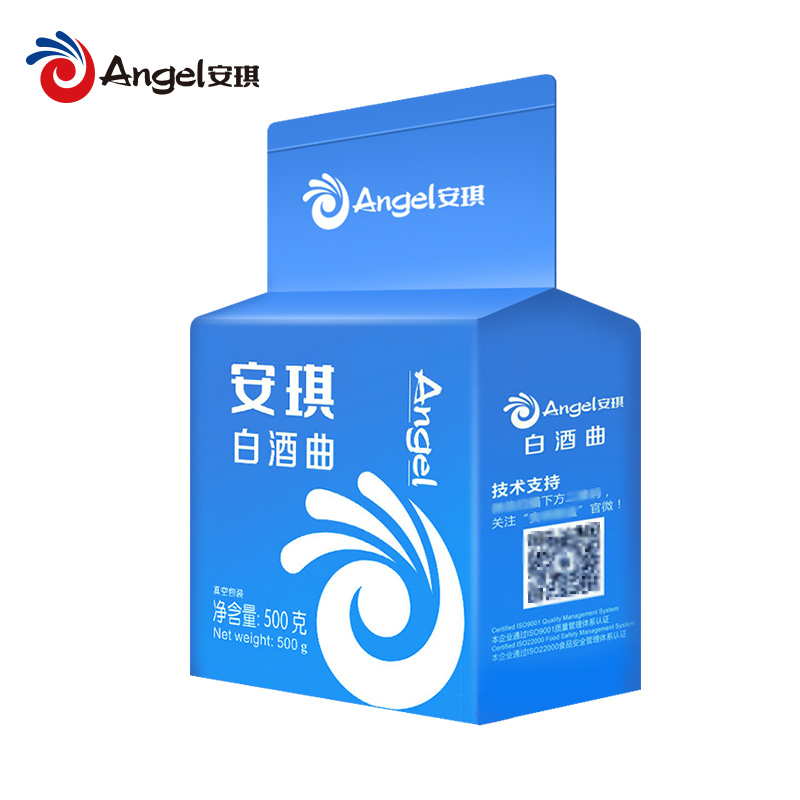
Baijiuqu 白酒曲 (Angel Blue Baijiu qu)
This is a blue bag with baijiu qu. It gives the distinct flavour of baijiu.
Ingredients
酵母 Yeast
根霉Rhizopus
a-淀粉酶 – Alpha amylaze
葡糖淀粉酶 – Glucoamylaze
植酸酶 Phytase
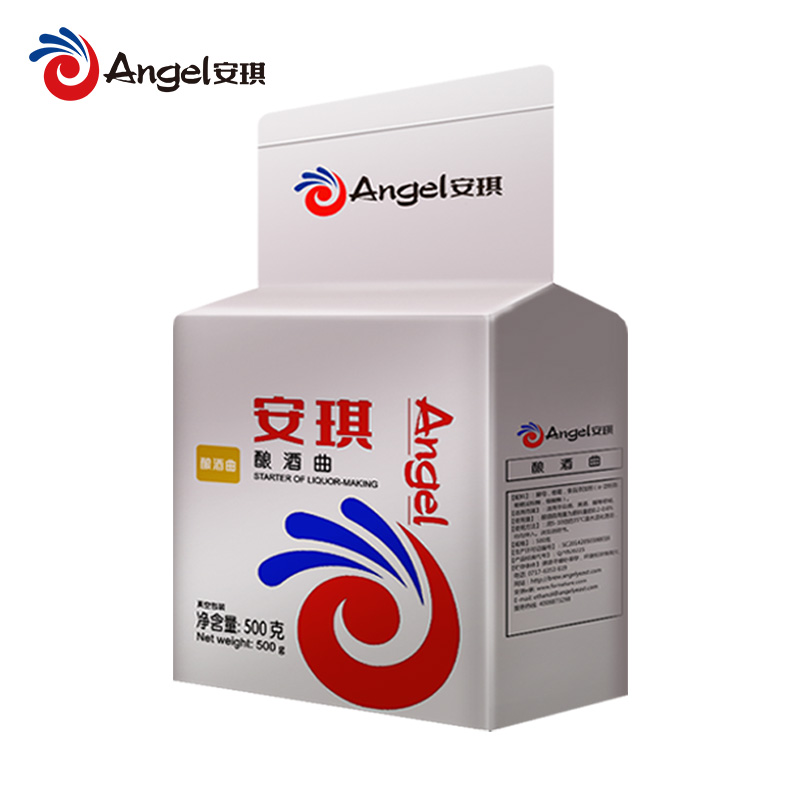
Starter of Liquor Making - 酿酒曲 (also know as Angel Yellow Label)
Good for making flavourless product.
Ingredients:
酵母 - Yeast
根霉 - Rhizopus
a淀粉酶 – Alpha amylaze
葡糖淀粉酶 - Glucoamylaze
植酸酶 - Phytase
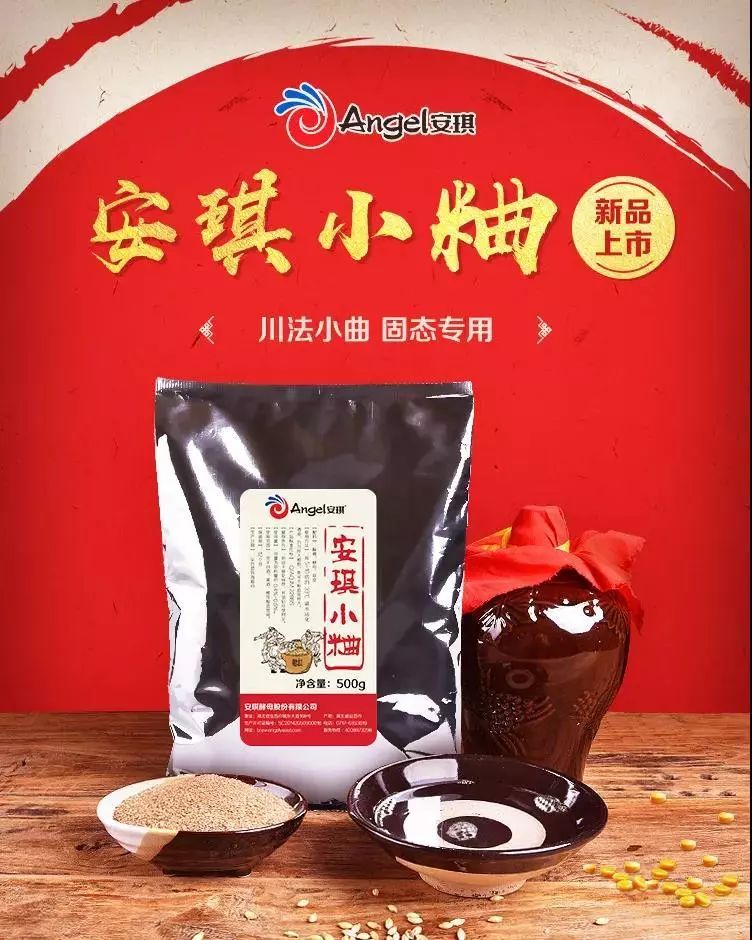
Angel small qu 安琪小粬
This one is good for making Baijiu and rice wine.
Ingredients:
根霉 – Monascus (basically Chinese koji)
酵母 – Yeast
麸皮 – Bran (most likely from wheat)
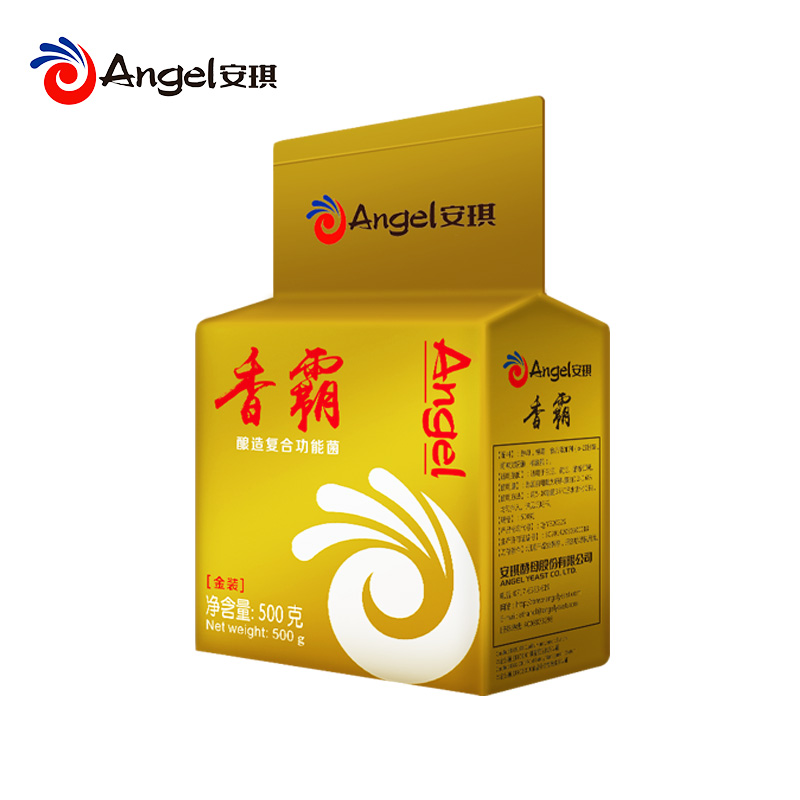
香霸 Fragrance Lord (sometimes written金香霸 Golden Fragrance Lord)
This is the most unique product from Angel that I have seen. This product was made when people using the baijiu qu asked Angel if they could make a product that could increase ethyl acetate and ethyl lactate in the finished product. One of the ways they thought of increasing those esters was adding protease (enzyme for splitting up protein) to the mix. The effect is intense and according to Angel, the increase in ethyl acetate when using Fragrance Lord can be up to 20 times that of just using the Angel Blue baijiu qu(xii). I added some to a solid state rice mash and the next day it had a very strong but oddly pleasant smell of nail polish remover. According to some user on the Chinese equivalent of homedistiller.org, niangjiu8.com, Fragrance Lord gives a great smell during fermentation, but most of it disappears during distillation.(xiii)
Ingredients:
酿酒酵母 Brewing alcohol yeast
甜酒曲(根霉)Sweet alcohol qu (Rhizopus)
葡糖淀粉酶 Glucoamylaze
蛋白酶 Protease
酯化红曲 Monascus
What do all these words mean??!?
Qu/starter – once again, this is a word meaning yeast and microbes put together. Everything you need to convert and ferment starches.
Rhizopus – basically chinese koji (it is not koji, but works similarly)
Alpha and glucoamylaze – enzymes that cut starches into smaller sugar molecules.
Protease – Enzyme that cuts up proteins into smaller chain amino acids. This helps the production of certain esters.
Monascus/Red qu - A type of qu made from rice with a red mould growing on it.
Phytase – an enzyme that breaks down phytic acid. From what i understand this seems to be added in order to release phosphorus for the yeast to eat. Could be good with some input here.
I don’t know where to publish this thread so i did it here.
Also, the post probably has some mistakes since it is so long. Please bear with me.
Thank you for reading my TedTalk
Everything can be bought from this aliexpress seller. Prices are bad abysmal. Look around for cheaper sellers if you wanna try making baijiu. If you can, buy directly from a vendor in China and have it sent to your home address. I don’t know how to. These qu packs are fairly inexpensive in China. Most cost something like 3.50 USD in China.
https://www.aliexpress.com/item/1005002 ... mainSearch
Ⅰ https://whiskyscience.blogspot.com/2011 ... vours.html
Ⅱ https://en.angelyeast.com/blog/distille ... aijiu.html
Ⅲ http://brew.angelyeast.com/contents/3492/82180.html
Ⅳ http://brew.angelyeast.com/contents/3492/82180.html
Ⅴ https://en.wikipedia.org/wiki/Alcoholic ... ina#Baijiu
Ⅵ
Ⅶ
Ⅷ https://www.niangjiu8.com/thread-499-1-1.html
Ⅸ
Ⅹ
Ⅺ
Ⅻ https://www.angelyeast.com/contents/3329/66405.html
XIII https://www.niangjiu8.com/forum.php?mod ... F%E3%B0%D4